
Cricket Match Predictions Mein Head-to-Head Stats Actually Kitna Matter Karte Hain?
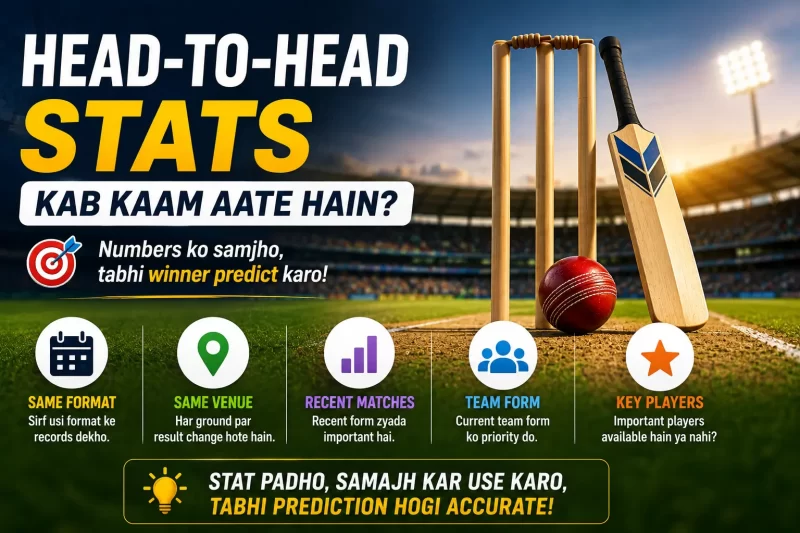
Maine count hi chhod diya hai ki kitni baar commentator ne bola hai, “Team A head-to-head mein 15-8 se lead kar rahi hai,” aur uske turant baad Team A badly lose kar deti hai. Head to head cricket stats prediction claims har jagah use hote rehte hain, lekin jis tarah usually quote kiye jaate hain, unmein se most almost useless hote hain. Real value in numbers ke neeche hidden hoti hai, aur use properly dig karke samajhna padta hai.
Ye guide exactly explain karti hai ki head-to-head stats kab actually aapko winner predict karne mein help karte hain, aur kab wo sirf TV par impressive sound karne wala ek number hote hain. Real data, real examples, no guesswork.
Kya Head-to-Head Stats Actually Cricket Matches Predict Karne Mein Useful Hote Hain?
Kabhi-kabhi, lekin sirf tab jab unhe format, venue aur recent years ke basis par properly filter kiya jaye. Raw, all-time head-to-head number apne aap mein cricket ke weakest prediction tools mein se ek hai.
Problem simple hai: 70 saal ka head-to-head record completely different eras, players, rules aur conditions ko ek hi misleading number mein mix kar deta hai. 1980s ki Test series ka stat is saal hone wale T20I ke baare mein almost kuch useful nahi batata.
Lekin right way se use karo to head-to-head data ki value ab bhi hai. Ye genuine patterns reveal kar sakta hai, jaise kisi team ka specific bowling attack ke khilaf struggle karna, ya kisi particular venue par strong record hona, jinhe form, conditions, aur team news ke saath prediction mein factor karna useful hota hai.
Broadcasters Head-to-Head Stats Ko Itna Pasand Kyun Karte Hain?
Broadcasters head-to-head numbers constantly use karte hain kyunki screen par dikhana easy hota hai aur dramatic sound karta hai, na ki isliye kyunki wo result predict karne mein genuinely strong hote hain. TV par koi stat trust karne se pehle ye samajhna useful hai.
“Team A leads 20-8” jaisa graphic airtime fill karta hai, commentators ko discuss karne ke liye simple topic deta hai aur viewers ke liye storyline create karta hai. Ismein format, venue ya recency ke basis par filtering ki zarurat nahi hoti, aur exactly isi wajah se ye number often misleading ban jata hai.
Jab aap ye samajh jaoge, to notice karoge ki kitni baar aise graphics quote hone ke baad bhi “underdog” match jeet jata hai. Ye bad luck nahi hai, ye bas signal hai ki stat starting se hi weak tha.
All-Time Head-to-Head Records Predictions Ko Mislead Kyun Karte Hain?
All-time records misleading hote hain kyunki ye formats, eras aur squads ko mix kar dete hain jinka aaj ki teams se almost koi relation nahi hota. Jo number decisive lagta hai, wo often sport ke ek completely different version ka noise hota hai.
India vs Australia ko example lete hain, cricket ki biggest rivalries mein se ek. 1947 se late 2025 tak all formats mein played 296 matches ke updated records ke mutabik Australia overall head-to-head mein 143 wins vs India ke 111 wins se lead karta hai. Sunne mein Australia ka clear historical edge lagta hai.
Lekin format-wise breakdown karo to picture completely change ho jati hai. Test cricket mein Australia 112 matches mein 48 wins vs 33 se lead karta hai. ODIs mein gap aur bhi bada hai, 152 matches mein 84 wins vs 58. Lekin specifically T20Is mein India actually rivalry lead karta hai, last recorded meetings mein India ke 22 wins ke comparison mein Australia ke 12 wins hain.
Example: Agar koi T20I se pehle quote kare, “Australia leads India 143-111 all time,” to us specific match ke liye ye stat almost worthless hai, kyunki jis format mein stat apply ho raha hai, wahi format hai jahan India actually dominate karta hai. Ye single example clearly dikhata hai ki format-blind head-to-head numbers aapko completely wrong direction mein le ja sakte hain.
Small Head-to-Head Samples Itne Unreliable Kyun Hote Hain?
Small samples unreliable hote hain kyunki sirf kuch matches ka result ek bad day, ek injury ya ek unusual pitch ki wajah se heavily swing kar sakta hai, bina ye genuinely reflect kiye ki kaunsi team actually better hai.
Isse sirf 5 baar coin flip karne jaisa samjho. Agar 5 flips mein 4 heads aa jayein, iska matlab ye nahi ki coin unfair hai, bas 5 flips real conclusion draw karne ke liye too small sample hai. Cricket head-to-head stats bhi exactly isi tarah work karte hain, especially T20Is jaise formats mein jahan two teams couple of years mein sirf 6 se 10 baar mil sakti hain.
Ek general rule yaad rakho: matches ki number jitni small hogi, head-to-head record ko apne aap mein utna hi kam trust karna chahiye, aur current form aur conditions ko zyada weight dena chahiye.
Example: Agar two teams ne last two years mein sirf 4 T20Is khele aur ek team ne 3 jeete, to 75% record kaafi strong lagta hai. Lekin sample itna small hai ki sirf ek close match opposite direction mein chala jata to poori story flip ho sakti thi. Isi wajah se aise small head-to-head ko apne aap mein zyada prediction weight nahi dena chahiye.
Kya Venue Overall Head-to-Head Record Se Zyada Matter Karta Hai?
Haan, venue-specific head-to-head data usually overall record se far more predictive hota hai, kyunki home conditions, pitch type aur crowd support results ko aise shape karte hain jo blended global stat completely hide kar deta hai.
Same country ke andar bhi head-to-head numbers change ho sakte hain depending on matches exactly kahan played hue. India vs Australia ODIs ko specifically India mein dekho, to record overall ODI head-to-head ke comparison mein kaafi closer hai, roughly 84-58 all-venue split ke comparison mein kaafi zyada even contest.
Socho to ye logically sense karta hai. Team ka bowling attack, batting depth aur tactical approach kuch conditions ko dusri conditions se better suit karta hai. Jo side Australia mein head-to-head meetings dominate karti hai, wahi same matchup India mein heavily struggle kar sakti hai, aur dono records ko blend karna ye difference completely hide kar deta hai.
Example: England historically India ke khilaf India mein played Tests mein struggle karta raha hai, largely spin-friendly conditions ki wajah se jo England ko home par rarely milti hain, even un years mein bhi jab England ka overall head-to-head India ke khilaf paper par fairly competitive dikhta tha.
Kya Player-vs-Player Matchups Team Head-to-Head Se Zyada Matter Karte Hain?
Often, haan. Specific batter ka specific bowler ke khilaf record, ya certain bowling style ke khilaf performance, broad team-level head-to-head number se usually sharper aur more useful signal hota hai.
Team head-to-head 11 different players aur constantly changing squads ko ek saath blend kar deta hai. Player-vs-player data, jaise top-order batter historically left-arm pace ke khilaf kaisa perform karta hai, ya spinner ne kisi particular opponent ko multiple times dismiss kiya hai, much more specific hota hai aur next match mein kya ho sakta hai uske liye often more predictive bhi hota hai.
Exactly yehi type ki detail experienced analysts aur team think tanks series se pehle study karte hain, na ki broadcast graphics par dikhne wala blended team record. Captains is information ka use bowling changes aur batting-order tweaks ko known weaknesses ke around plan karne ke liye karte hain.
Example: Agar kisi team ka opening batter repeatedly ek certain type ki left-arm swing bowling ke khilaf career mein dismiss hua hai, to us exact bowling threat wali team ke khilaf match se pehle ye matchup detail kisi bhi team-wide head-to-head record se zyada important hogi.
Head-to-Head Data Kitna Recent Hona Chahiye?
Most useful window usually last two to three years hota hai, kyunki modern cricket mein squads, form aur playing styles fast change hote hain, aur older results current teams ko accurately reflect karna band kar dete hain.
Player retirements, injuries aur generational shifts team ki identity quickly change kar dete hain. Decade-old matches se partly built head-to-head record mein aise players included ho sakte hain jo ab kisi squad ka part hi nahi hain, isliye prediction ke liye older data almost irrelevant ho jata hai.
Exactly isi wajah se serious analysts aur bookmakers rarely career-long head-to-head totals par heavily depend karte hain. Betting markets aur professional prediction models recent form aur recent head-to-head results ko all-time totals se zyada weight dete hain, kyunki sharp money statistically useful cheez follow karta hai, pre-match graphic mein dramatic lagne wale number ko nahi.
Example: Koi team jo decade pehle completely different captain aur bowling attack ke under rival ke khilaf mostly matches lose karti thi, ab rebuilt younger squad ke saath usi rival ke khilaf strong recent record hold kar sakti hai. Purana combined number quote karna is shift ko completely miss kar dega.
Head-to-Head Stats Use Karne Ka Smarter Tarika Kya Hai? Ek Worked Example
Smarter approach head-to-head data ko format, venue type aur recency ke basis par filter karta hai, phir conclusion draw karta hai. Isse vague aur misleading number genuinely useful signal mein convert ho jata hai. Dekhte hain filtering se picture exactly kaise change hoti hai.
Raw, unfiltered number se start karo: India vs Australia, all formats, all-time, Australia leads 143-111. Apne aap mein ye suggest karta hai ki dono teams ke kisi bhi match se pehle Australia clear edge mein hai.
Ab filters apply karo. Pehle format match karo, maan lo upcoming match T20I hai. Picture completely flip ho jati hai: India specifically T20I format mein 22-12 se lead karta hai. Next, venue check karo, agar match India mein hai to historical data show karta hai ki Australia Indian soil par across formats comparatively zyada struggle karta hai. Finally, recency check karo, India ka stronger T20I record mostly recent years mein build hua hai, current core squad ke players ke saath.
Filtering process ke end tak starting ka “Australia leads head-to-head” headline flip hoke is specific match ke liye genuinely useful India-favoring signal ban jata hai, sirf format, venue aur recency filters properly apply karke.
Quick filtering checklist:
- Sabse pehle format match karo, Test, ODI ya T20I, kabhi mix mat karo.
- Venue type match karo, home, away ya neutral ground.
- Data ko last 2-3 years tak limit karo jahan sample size allow karta ho.
- Sample size check karo, 8-10 matches se kam ko real caution ke saath treat karo.
- Player-vs-player matchups check karo, sirf team totals nahi, agar data available ho.
- Isse ek signal ki tarah treat karo, deciding factor nahi, pitch, form aur team news ke alongside.
👉 Get expert Today cricket match predictions 100 sure, top picks & fantasy tips – Download AllCric App or visit AllCric Website
FAQS❓
Nahi, lekin trust karne se pehle unhe format, venue aur recent years ke basis par filter karna chahiye. Properly filtered head-to-head record useful supporting signal hai, jabki raw all-time number mostly noise hota hai.
Kyunki overall record Tests, ODIs aur T20Is ko nearly eight decades mein ek saath blend karta hai. India ka stronger T20I record current squad ki us specific format mein strength reflect karta hai, jise combined all-time number completely hide kar deta hai.
Kyunki few matches ek unusual result, injury ya pitch ki wajah se heavily affect ho sakte hain, bina genuinely ye reflect kiye ki kaunsi team better hai. Sample mein matches jitne kam honge, prediction par us record ka influence utna hi kam hona chahiye.
Haan, wo recent, format-specific head-to-head data ko current form, conditions aur team news ke alongside factor karte hain, lekin old, blended, all-time records ko rarely heavy weight dete hain, kyunki current game ke liye unki predictive value kaafi low hoti hai.
