

Table Of Contents
- 1. How Did AllCric Rank the Best Celebrations in Cricket History?
- 2. Quick-Answer Table: 10 Best Celebrations in Cricket History
- 1. 1. Why Is Sourav Ganguly’s Lord’s Shirt Wave Cricket’s Most Iconic Celebration?
- 2. 2. Why Did India Carry Sachin Tendulkar After the 2011 World Cup Final?
- 3. 3. What Did Pakistan’s Push-Ups at Lord’s Mean?
- 4. 4. What Does Sheldon Cottrell’s Salute Mean?
- 5. 5. How Did Dwayne Bravo’s Champion Dance Become a Cultural Moment?
- 6. 6. Who Made the Chainsaw Celebration Famous in Cricket?
- 7. 7. Why Does Ravindra Jadeja Perform a Sword Celebration?
- 8. 8. What Is Shikhar Dhawan’s Thigh-Five?
- 9. 9. Why Is Imran Tahir’s Running Celebration So Loved?
- 10. 10. How Did Kevin Sinclair’s Cartwheel-Backflip Go Viral?
- 3. Honourable Mentions
- 4. FAQS❓
Top 10 Best Celebrations in Cricket History
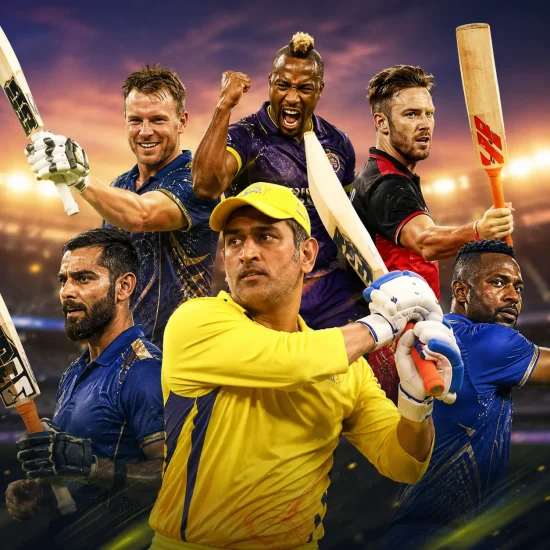
How Did AllCric Rank the Best Celebrations in Cricket History?
Factor | Weight |
Cultural impact | 30% |
Match significance | 25% |
Longevity and recognition | 20% |
Originality | 15% |
Meaning and story | 10% |
The scores below are AllCric editorial ratings, not official cricket statistics. The factual match details, dates, scores and explanations behind the celebrations were verified separately.
Quick-Answer Table: 10 Best Celebrations in Cricket History
| Rank | Player/Team | Celebration | Match/Tournament | Year | Score/100 | Why It Became Famous |
|---|---|---|---|---|---|---|
| 1 | Sourav Ganguly | Shirt wave at Lord’s | NatWest Series final vs England | 2002 | 96 | A response to Flintoff and a symbol of Indian defiance at Lord’s |
| 2 | Team India | Carrying Sachin Tendulkar | World Cup final vs Sri Lanka | 2011 | 93 | Tribute after Tendulkar won the World Cup at his sixth and final attempt |
| 3 | Pakistan team | Push-ups and salute at Lord’s | First Test victory vs England | 2016 | 88 | Tribute to military fitness trainers after a 75-run away win |
| 4 | Sheldon Cottrell | Military march and salute | Regular wicket celebration | 2013 onward | 85 | Honours his service with the Jamaica Defence Force |
| 5 | Dwayne Bravo | Champion dance | T20 World Cup final celebrations | 2016 | 83 | His song, dance and West Indies’ World Cup win combined |
| 6 | Brett Lee | Chainsaw | Regular wicket celebration | 2000s | 80 | One of fast bowling’s most recognisable trademark gestures |
| 7 | Ravindra Jadeja | Sword celebration | Batting milestones | 2010s onward | 78 | Bat-twirling gesture linked by Jadeja to his Rajput identity |
| 8 | Shikhar Dhawan | Thigh-five | Catches and major moments | 2010s onward | 75 | Kabaddi-inspired celebration with a distinctly Indian identity |
| 9 | Imran Tahir | Sprint towards the boundary | Regular wicket celebration | 2010s onward | 73 | Unrestrained joy recognised across international and franchise cricket |
| 10 | Kevin Sinclair | Cartwheel into backflip | Maiden Test wicket vs Australia | 2024 | 70 | Athletic celebration after a major wicket on Test debut |
1. Why Is Sourav Ganguly’s Lord’s Shirt Wave Cricket’s Most Iconic Celebration?
AllCric score: 96/100
On July 13, 2002, England made 325/5 in the NatWest Series final at Lord’s, leaving India a target of 326. India then collapsed to 146/5 and appeared to be heading towards defeat.Yuvraj Singh scored 69 from 63 balls and Mohammad Kaif made an unbeaten 87 from 75. Their 121-run partnership revived the chase before Kaif and the lower order completed a two-wicket victory with three balls remaining.As the winning runs were completed, Ganguly removed his shirt on the Lord’s balcony and waved it above his head.The celebration was widely understood as a response to Andrew Flintoff, who had removed his shirt after England won the final ODI in Mumbai earlier in 2002 to draw the six-match series 3–3. Ganguly and people connected with the Indian team later acknowledged that Flintoff’s Wankhede celebration formed part of the background to the Lord’s gesture.This was not only an emotional reaction to a dramatic victory. An Indian captain had openly challenged cricket’s traditional restraint at the sport’s most traditional venue.
The combination of the comeback, the venue and the meaning attached to the gesture makes Ganguly’s shirt wave AllCric’s number-one cricket celebration.
2. Why Did India Carry Sachin Tendulkar After the 2011 World Cup Final?
AllCric score: 93/100
India defeated Sri Lanka by six wickets in the 2011 World Cup final at Mumbai’s iconic Wankhede Stadium on April 2, 2011. It was India’s first ODI World Cup title since 1983.After the victory, Virat Kohli carried Sachin Tendulkar on his shoulders while teammates including Suresh Raina, Yusuf Pathan and Harbhajan Singh helped support him during the lap of honour.Tendulkar had competed at six World Cups, beginning in 1992. The 2011 tournament was his sixth and final attempt, and it delivered the trophy that had been missing from his career.Kohli explained the tribute by saying that Tendulkar had carried the burden of the nation for 21 years and that it was time for the team to carry him.It is important to distinguish this from a retirement farewell. Tendulkar continued playing international cricket until 2013. The Wankhede lap was instead a spontaneous tribute to the player who had inspired much of the victorious squad.
Tendulkar being carried around his home ground became the defining human image of India’s 2011 World Cup triumph.
3. What Did Pakistan’s Push-Ups at Lord’s Mean?
AllCric score: 88/100
Pakistan beat England by 75 runs in the first Test at Lord’s in July 2016. England were set 283 to win but were dismissed for 207, with Yasir Shah finishing with ten wickets in the match.After the victory, Pakistan’s players gathered in front of the pavilion, performed push-ups and completed the routine with a military-style salute.The celebration referred to Pakistan’s pre-tour fitness camp with army trainers. Misbah-ul-Haq had already performed push-ups after reaching his first-innings century, while the entire team repeated the gesture after completing the victory.The push-ups were therefore not simply a taunt aimed at England. They were a coordinated acknowledgement of the trainers who had prepared the squad before the tour.The location increased the impact. A Pakistan team winning at Lord’s and then completing a military fitness routine in front of the pavilion produced a striking contrast with the ground’s formal traditions.
Pakistan’s Lord’s push-ups combined a meaningful tribute with one of the team’s most memorable overseas Test victories.
4. What Does Sheldon Cottrell’s Salute Mean?
AllCric score: 85/100
Sheldon Cottrell’s short march followed by a sharp salute is one of modern cricket’s most recognisable wicket celebrations.It is not merely a theatrical send-off. Cottrell has served with the Jamaica Defence Force and has explained that the gesture is a tribute to his military background.Cottrell told the BBC: “It’s a military-style salute. I’m a soldier by profession.” He added that the salute was his way of showing respect to the Jamaica Defence Force.He also said that he practised the movement for six months during his army training. The consistency of the routine — march, stand to attention and salute — reflects its personal meaning.The celebration became especially visible during the 2019 World Cup, when supporters and young fans began copying it in the stands and away from the grounds.
Cottrell’s salute succeeds because it is distinctive, repeatable and rooted in a genuine part of his life outside cricket.
5. How Did Dwayne Bravo’s Champion Dance Become a Cultural Moment?
AllCric score: 83/100
Dwayne Bravo released the song “Champion” in 2016, and its dance became closely associated with the West Indies team during that year’s T20 World Cup. Beyond the celebration, Bravo also built a reputation as one of the best death-over bowlers in IPL history. In the final against England at Eden Gardens, West Indies needed 19 runs from the final over. Carlos Brathwaite hit Ben Stokes for four consecutive sixes to complete one of the most dramatic finishes in T20 World Cup history.Bravo and his teammates then celebrated with the Champion song and dance. ESPNcricinfo’s live coverage recorded Bravo leading the post-match rendition, while images from the tournament showed the dance becoming part of the team’s wider celebrations.
The celebration connected music, cricket and Caribbean identity. Bravo had not simply adopted a popular song created by someone else: he was the performer behind the song and one of the players celebrating the World Cup victory.
The Champion dance became bigger than a wicket or a single match because it provided the soundtrack to West Indies’ 2016 title.
6. Who Made the Chainsaw Celebration Famous in Cricket?
AllCric score: 80/100
Brett Lee made the chainsaw celebration famous in international cricket.After taking certain wickets, the Australian fast bowler would make a forceful pulling motion commonly compared to starting a chainsaw. The movement fitted the pace, energy and aggression of his bowling.Lee was capable of exceeding 150 km/h and was one of the most recognisable fast bowlers of the early 2000s. Cricket Australia’s retrospective on his career specifically identified the chainsaw among the celebrations that contributed to his public image.Unlike celebrations linked to one final or one tournament, Lee used the gesture repeatedly across his career. That repetition helped turn it into a visual trademark.The chainsaw was also easy for supporters and young cricketers to imitate. A fan did not need to know the match situation to recognise who the gesture represented.
Lee’s chainsaw ranks this highly because it became one of the earliest truly global signature celebrations associated with a fast bowler.
7. Why Does Ravindra Jadeja Perform a Sword Celebration?
AllCric score: 78/100
After reaching major batting milestones, Ravindra Jadeja often twirls his bat in a sword-like motion.He has performed the celebration after fifties and centuries in international cricket and the IPL. The official IPL platform has itself described the movement as Jadeja’s “quintessential sword celebration.”
Jadeja has publicly linked the gesture to his Rajput identity, explaining that he celebrates success by swinging the bat because he cannot carry a sword onto the cricket field.The celebration is therefore more than a random flourish. It combines a batting milestone, a personal cultural reference and an immediately recognisable visual movement.It has become such a consistent part of Jadeja’s identity that crowds often anticipate the bat twirl as soon as he reaches fifty or a hundred.
Jadeja’s sword celebration ranks among cricket’s best because it turns a conventional milestone into a distinct personal ritual, while his fielding brilliance has also made him prominent in records for the most run-outs in IPL history.
8. What Is Shikhar Dhawan’s Thigh-Five?
AllCric score: 75/100
Shikhar Dhawan’s thigh-five involves slapping his thigh in a kabaddi-style gesture, most commonly after taking a catch, a skill also reflected in the record for the most catches by an IPL fielder. Dhawan has explained that he first used the celebration in Australia after taking a catch to dismiss Shane Watson. He said he enjoyed watching kabaddi and adopted the movement because he found the sport entertaining.The celebration became associated particularly strongly with Dhawan’s boundary catches. Supporters began copying it, and the gesture eventually became part of his “Gabbar” public persona.The original draft described it as a standard celebration after scoring runs or taking catches. While Dhawan has used the gesture in different situations, its verified origin and most familiar use are connected to fielding and catches.
The thigh-five stands out because it brought a recognisable kabaddi movement into cricket and gave it a new audience.
9. Why Is Imran Tahir’s Running Celebration So Loved?
AllCric score: 73/100
Imran Tahir often responds to a wicket by sprinting away from his teammates, sometimes continuing almost to the boundary with his arms spread.The South African leg-spinner displayed versions of this celebration in international cricket and across several franchise competitions, while his wicket-taking impact also places him among notable top IPL spin bowlers. Official tournament channels have repeatedly highlighted the run as one of cricket’s most entertaining celebrations.The original version said Tahir sprinted after “every wicket.” That captures the reputation of the celebration but is too absolute. He has celebrated wickets in different ways, although the long sprint remains his best-known routine.The appeal lies in its apparent spontaneity. Unlike a tightly choreographed salute or dance, Tahir’s celebration often looks as though he has simply been overwhelmed by the moment.Its core identity has also remained recognisable despite appearing in different countries, teams and competitions.
Tahir’s run ranks among cricket’s best celebrations because it communicates uncomplicated joy more clearly than almost any rehearsed gesture.
10. How Did Kevin Sinclair’s Cartwheel-Backflip Go Viral?
AllCric score: 70/100
In January 2024, West Indies debutant Kevin Sinclair claimed his maiden Test wicket during the second Test against Australia at the Gabba.Sinclair dismissed Usman Khawaja for 75, with Alick Athanaze taking the catch at first slip. He then sprinted away and performed a cartwheel into a backflip.The athletic movement immediately attracted attention from the crowd and commentary team. Michael Vaughan, Allan Border and Ian Smith were among the commentators who praised the celebration during the broadcast.Sinclair later explained to the ICC that the routine began when he was eight years old and that he repeatedly practised it in his back garden. He described it as his trademark and said he had perfected it over the years.The original draft referred to a “double backflip.” Available footage and stronger reports describe the movement more accurately as a cartwheel followed by a backflip or somersault.
A maiden Test wicket, a major batter and an acrobatic trademark combined to make Sinclair’s Gabba celebration instantly memorable.
Honourable Mentions
Several celebrations just missed the top 10:
- Bangladesh’s Nagin dance — Bangladesh’s players performed the snake-inspired celebration after defeating Sri Lanka in the dramatic virtual knockout match of the 2018 Nidahas Trophy. It became inseparable from the tension and controversy surrounding the match.
- Shoaib Akhtar’s aeroplane celebration — the Rawalpindi Express would spread his arms and run after taking wickets. ESPNcricinfo repeatedly described it as his trademark aeroplane celebration.
- Shahid Afridi’s star-man pose — Afridi’s arms-raised, fingers-to-the-sky pose was a recognised personal trademark after wickets and victories. It was distinctive, although it did not carry the same single-match historical association as the highest-ranked entries.
- West Indies’ Gangnam Style celebration in 2012 — the West Indies danced during their successful 2012 T20 World Cup campaign, including after the semi-final victory over Australia and during the title celebrations. It captured the team’s energy but remained closely tied to a specific global pop-culture moment.
- Sachin Tendulkar’s skyward gesture — Tendulkar’s habit of looking or pointing towards the sky after major achievements carried a quieter and more personal meaning, commonly associated with the memory of his late father. It lacked the theatrical scale of the main list but remains one of cricket’s most emotionally recognisable gestures.
👉 Get expert Today cricket match predictions 100 sure, top picks & fantasy tips – Download AllCric App or visit AllCric Website
FAQS❓
According to AllCric’s ranking criteria, Sourav Ganguly waving his shirt at Lord’s Cricket Ground after India’s 2002 NatWest Final win is considered the most iconic cricket celebration. It symbolized a fearless new era for Indian cricket.
Ganguly celebrated India’s dramatic chase of 326 in the NatWest Final by waving his shirt from the Lord’s balcony. The moment was also seen as a response to Andrew Flintoff removing his shirt at Wankhede earlier that year.
Sheldon Cottrell performs a military-style salute because he served in the Jamaica Defence Force. The celebration reflects his army background and respect for the military.
Ravindra Jadeja celebrates batting milestones by twirling his bat like a sword. He has said the gesture represents his Rajput heritage and personal style.
Kevin Sinclair is famous for his cartwheel-and-backflip celebration. He showcased it after taking his maiden Test wicket against Australia in 2024.

Related Articles
 IPL 2026 – AllCric - Blogs
Top 10 Super Overs in IPL History: Most Dramatic IPL Finishes
 IPL 2026 – AllCric - Blogs
IPL 2026 Emerging Player: Sooryavanshi’s Historic Rise
 IPL 2026 – AllCric - Blogs